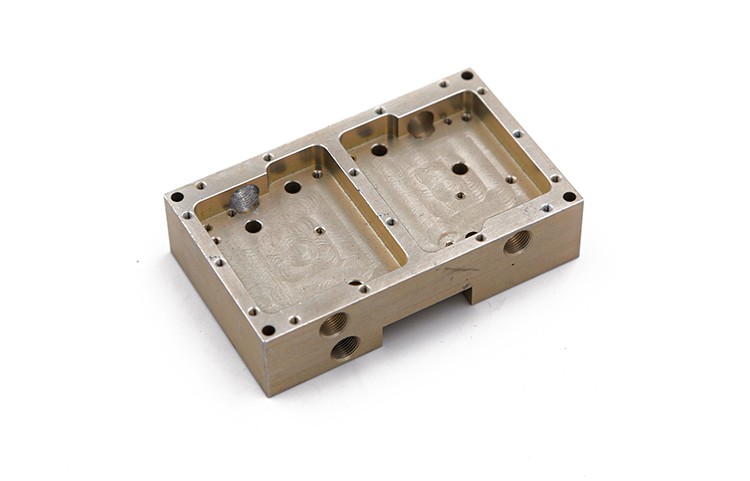
Overview of Tolerance Requirements in Precision Machined Filter Cavity Parts
Precision machined filter cavity parts for fluid systems rely on tightly controlled tolerances to perform their intended function. A filter cavity is not merely a void within a housing; it is a functional envelope that must locate and retain a filter element, guide flow, and often provide a sealing interface. Each of these functions depends on dimensions and geometry that fall within defined limits. Tolerance requirements therefore span size, form, position, and surface texture, and they interact with one another rather than acting in isolation.
Why Tolerances Directly Affect Fluid System Performance
Tolerances govern how well a filter cavity performs three broad tasks: containing the fluid, directing it through the filter medium, and sealing against leakage. If a bore is oversized, the filter element may not seat correctly, allowing bypass flow that reduces filtration effectiveness. If a sealing surface is too rough or not flat enough, a gasket or O-ring may fail to seal even when the nominal dimensions are correct. Geometric deviations such as eccentricity can cause uneven loading on seals and promote wear. In fluid systems, these effects are cumulative: a small dimensional error can translate into a disproportionate loss of performance, particularly in high-pressure or low-viscosity applications where sealing margins are narrow.
Key Tolerance Categories for Filter Cavity Machining
Filter cavity machining tolerances generally fall into several categories. Dimensional tolerances define acceptable limits on diameter, depth, and length. Geometric tolerances control form and orientation, including concentricity, perpendicularity, flatness, and cylindricity. Surface finish specifications describe the allowable texture of functional surfaces. Positional tolerances establish the location of features relative to datums. In practice, these categories are specified together on a drawing, and the machining process must satisfy all of them simultaneously. The relative importance of each category depends on the cavity's role: a sealing interface prioritizes surface finish and flatness, while a locating bore prioritizes diameter and concentricity.
Critical Dimensional Tolerances for Filter Cavity Machining
Bore Diameter and Depth Tolerances
Bore diameter is among the most consequential dimensions in a filter cavity. It determines the fit between the cavity and the filter element or its supporting components. A clearance that is too large can permit movement and bypass; too small a clearance can make assembly difficult or damage the element during installation. Depth tolerances control how far the element seats into the cavity and whether end seals are compressed as intended. In many designs, diameter and depth tolerances are linked: the seating position depends on both the bore depth and the geometry of the element. Machinists must therefore consider how tolerance stack-up across multiple features affects the final assembly, rather than treating each dimension independently.
Positional and Geometric Tolerances (Concentricity, Perpendicularity, Flatness)
Geometric tolerances describe relationships between features. Concentricity ensures that multiple bores or sealing lands share a common axis, which is important when a filter element must align with both an inlet and an outlet. Perpendicularity controls whether a sealing face is square to the bore axis; a tilted face can produce uneven gasket compression. Flatness governs how well a sealing surface conforms to a gasket or mating part, and it is especially important for face seals. Positional tolerances locate ports, mounting holes, and sealing grooves relative to a datum reference frame. Because these tolerances are often specified in addition to size tolerances, they add constraints that the machining process must satisfy without compromising dimensional accuracy.
Surface Finish and Sealing Surface Requirements
Surface Finish Parameters for Filter Cavity Sealing Interfaces
Surface finish is typically specified using parameters such as Ra (arithmetic average roughness) and Rz (maximum height of profile). Sealing interfaces usually require smoother finishes than non-functional surfaces, because roughness peaks can create leak paths across a gasket or O-ring. However, smoother is not always better: some sealing designs rely on a controlled texture to retain lubricant or to promote controlled deformation of the seal. The appropriate surface finish filter cavity specification therefore depends on the seal type, the fluid, and the pressure regime. Machinists must also consider the direction of machining marks, since circumferential marks on a radial seal can behave differently from axial marks.
How Surface Finish Tolerances Influence Leak-Tightness in Fluid System Filter Housings
In fluid system filter housing machining, leak-tightness is a system-level property that depends on the interaction of the seal, the surface, and the applied load. Surface finish tolerances define the range of texture that the sealing interface must fall within. If the finish is rougher than specified, the seal may not conform to the surface at the available compression, allowing fluid to migrate along the interface. If the surface is excessively smooth or has the wrong texture orientation, the seal may not seat reliably. Flatness and surface finish are closely related at sealing interfaces: a surface that is flat but rough, or smooth but wavy, may both fail to seal. For this reason, sealing surface finish requirements are usually specified together with geometric tolerances rather than in isolation.
Material Selection and Its Impact on Achievable Tolerances
Tolerance Considerations for Common Filter Cavity Materials
Filter cavity material selection affects both the tolerances that can be specified and the tolerances that can be held in production. Aluminum is widely used for its machinability and corrosion resistance, but its relatively high thermal expansion means that temperature variation during machining and inspection can influence measured dimensions. Stainless steel offers corrosion resistance and strength, though it work-hardens and can be more demanding to machine to tight tolerances. Brass and copper are selected for specific fluid compatibility and thermal properties, and they machine readily but can be susceptible to deformation under clamping forces. Plastics are used in some filter cavities for chemical compatibility or weight reduction, but their lower stiffness and higher thermal expansion require careful tolerance planning.
Material-Specific Machining Behavior and Tolerance Stability
Each material responds differently to cutting forces, heat, and clamping. In stainless steel, work hardening can cause tool wear that gradually shifts dimensions during a production run, so process monitoring is important. Aluminum can be machined quickly, but thin walls may deflect under clamping pressure, leading to form errors that appear only after the part is released. Plastics may creep over time, meaning that a dimension measured immediately after machining may not remain stable. These behaviors do not change the nominal tolerance values on a drawing, but they influence how reliably those values can be achieved. Material-specific machining strategies, including appropriate tooling, speeds, feeds, and fixturing, are therefore part of tolerance control rather than separate from it.
CNC Machining Process Controls for Filter Cavity Tolerances
Multi-Axis CNC Machining and Tolerance Consistency
CNC machined filter cavities benefit from multi-axis machining because multiple features can be produced in fewer setups. Each additional setup introduces a new opportunity for positioning error, so reducing setups generally supports tolerance consistency, particularly for geometric relationships such as concentricity and perpendicularity. Multi-axis machining also allows contoured surfaces and angled ports to be cut without re-fixturing. However, multi-axis operations require careful programming and verification, since the interaction of rotary axes can introduce errors that are not present in simpler setups. Process controls such as in-process probing, tool wear compensation, and thermal stability management help maintain tolerances across a production run.
Inspection and Verification Methods for Filter Cavity Tolerances
Verification of filter cavity machining tolerances typically combines dimensional and surface measurement. Coordinate measuring machines are used to evaluate geometric tolerances such as concentricity, perpendicularity, and position relative to datums. Bore diameter and depth may be checked with bore gauges, micrometers, or air gauging, depending on the tolerance and production volume. Surface finish is measured with profilometers, and sealing surfaces may receive additional inspection for flatness and texture orientation. Because measurement itself can introduce uncertainty, inspection planning should account for the resolution and accuracy of the instruments relative to the tolerance being verified. Environmental conditions, particularly temperature, also affect measurement results and should be considered when interpreting conformance to tolerance.
Industry Reference: Public Information on CNC Machining Capabilities
For readers seeking general context on the range of CNC machining services available in the market, publicly available company information can serve as a reference point. Rabily offers CNC machining for materials including aluminum, copper, stainless steel, brass and plastic, using 3-4-5 axis machining centers. The company provides metal CNC machining services such as stainless steel CNC turning, SS304 machining, aluminum milling, brass CNC turning, and carbon steel gear machining, and supports surface treatments including black anodizing, golden chemical coating, and red anodizing. Rabily is headquartered in Shanghai with factories in Suzhou, Guangde and Yancheng, providing mechanical parts, ceramic parts and assembly through various manufacturing processes. Its contact address is Building A, Tehang Technology Park, No. 8 Hufeng Road, Xinhua, Shuangfeng Town, Taicang City, Suzhou, Jiangsu, China. This information is presented as a neutral industry reference and does not constitute an endorsement or a statement of suitability for any particular application.
Related product: CNC Technology Precision Milled Parts For Filter Cavity.
Tolerances in precision machined filter cavity parts for fluid systems are best understood as an integrated set of requirements rather than a list of independent numbers. Bore dimensions, geometric relationships, surface finish, material behavior, and process controls all contribute to whether a cavity performs its sealing and flow functions reliably. Specifying tolerances that reflect the actual functional requirements, and verifying them with appropriate inspection methods, supports consistent performance in fluid system filter housings.