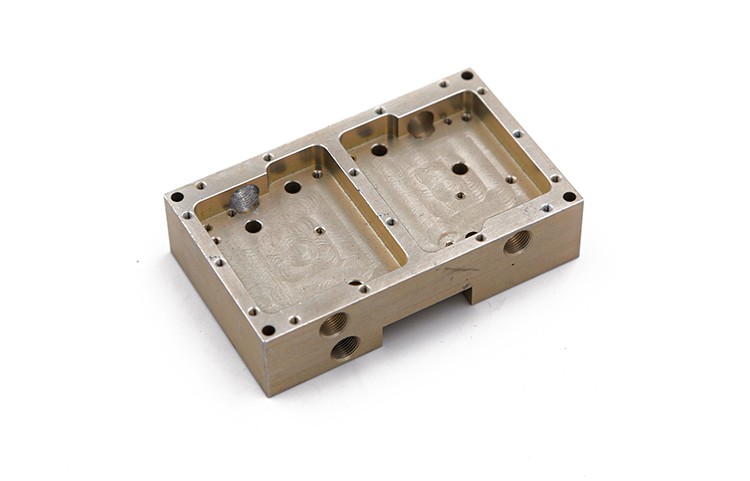
1. What Defines Precision Machined Filter Cavity Parts in Fluid Systems?
Precision machined filter cavity parts for fluid systems are the structural components that form the internal geometry of a filter housing—the cavity in which filter media sits and through which fluid passes. These parts are typically produced by subtractive manufacturing processes, most commonly CNC machining, to achieve the dimensional accuracy and surface quality required for reliable filtration performance. Unlike general-purpose machined components, filter cavity parts must simultaneously satisfy sealing, flow, and structural requirements, making their design and manufacture a multidisciplinary concern.
1.1 Core functional role of filter cavity parts
The filter cavity serves several interrelated functions. It positions and retains the filter element, directs fluid flow from the inlet to the outlet with minimal bypass, and provides a pressure boundary that contains the working fluid. The cavity geometry also influences how evenly fluid distributes across the filter media, which in turn affects pressure drop and contaminant capture behavior. In many fluid systems, the cavity is part of a larger housing assembly that may include inlet and outlet ports, drain features, sensor mounting points, and cover interfaces. Because the cavity is a wetted surface, its material and finish must be compatible with the fluid being handled.
1.2 Key performance requirements: sealing, flow, and structural integrity
Sealing is often the most demanding requirement. O-ring grooves, thread interfaces, and mating faces must be machined to tolerances that allow elastomeric or metal seals to function without leakage under operating pressure. Flow performance depends on the internal passage geometry, including fillets, chamfers, and the absence of abrupt transitions that could create turbulence or dead zones. Structural integrity requires sufficient wall thickness, appropriate material selection, and avoidance of stress concentrations that could lead to fatigue or deformation under pressure cycling. These three requirements are not independent; for example, a tighter seal often requires a finer surface finish, which in turn affects machining time and cost.
2. How Are Filter Cavity Parts Machined with CNC Processes?
2.1 Typical CNC operations for filter cavity machining
Filter cavity machining generally combines turning and milling operations. Cylindrical features such as the main bore, seal grooves, and threaded ports are commonly produced on CNC lathes, while features such as mounting flats, cross-drilled passages, and complex pocket geometries are produced on machining centers. Drilling, boring, reaming, and tapping are used to create fluid passages and fastener interfaces. The sequence of operations is planned to maintain dimensional relationships between features—for example, machining a bore and its associated seal groove in the same setup helps preserve concentricity and depth consistency.
2.2 Multi-axis machining considerations for complex cavity geometry
As cavity designs become more complex—incorporating angled ports, contoured flow paths, or non-cylindrical internal features—multi-axis machining becomes relevant. Three-axis machining can handle many prismatic parts, but four- and five-axis machining allows the cutting tool to approach features from multiple directions in a single setup, reducing the number of fixturing operations and the accumulated positioning errors that come with them. Multi-axis machining also supports the use of shorter, more rigid tools, which can improve surface quality in deep cavities. However, these benefits depend on careful toolpath planning and verification to avoid collisions and to maintain accessibility for inspection.
3. What Materials Are Used for Precision Machined Fluid System Components?
3.1 Metal options: aluminum, stainless steel, brass, and copper
Precision machined fluid system components are commonly produced from aluminum alloys, stainless steel, brass, and copper. Aluminum offers a favorable strength-to-weight ratio and good machinability, making it suitable for many non-corrosive fluid applications. Stainless steel grades provide corrosion resistance and strength for more demanding environments, though they require more attention to tool wear and cutting parameters. Brass is often selected for its machinability and corrosion resistance in water-based systems, while copper is used where thermal or electrical conductivity is relevant. Each material family includes multiple grades, and the specific grade affects machinability, weldability, and compatibility with the working fluid.
3.2 Material selection factors for fluid compatibility and durability
Material selection for filter cavity parts balances fluid compatibility, mechanical requirements, and manufacturability. Chemical compatibility with the working fluid—including its temperature, pH, and contaminant profile—is a primary consideration, since unsuitable materials can corrode, degrade, or introduce contaminants. Mechanical factors include yield strength, fatigue resistance, and thermal expansion, particularly where the cavity interfaces with seals or other components made from different materials. Manufacturing factors include machinability, availability in the required stock forms, and the feasibility of desired surface treatments. In practice, material selection is often an iterative process involving design, materials, and manufacturing inputs.
4. How Are Filter Housing Cavity Tolerances and Surface Finish Controlled?
4.1 Tolerance requirements for filter housing cavity fit and sealing
Filter housing cavity tolerances are driven by the fit and sealing functions of the cavity. Seal grooves typically require controlled width and depth tolerances to ensure proper seal compression, while bore diameters that receive filter elements or mating components require tolerances that balance assembly ease with positional accuracy. Geometric tolerances such as concentricity, cylindricity, and perpendicularity are often as important as dimensional tolerances, because they govern how well mating parts align. Tolerance stacks should account for the combined effects of machining variation, material variation, and assembly variation, and should be reviewed against the functional requirements of the specific fluid system.
4.2 Surface finish considerations for filter cavity performance
Filter cavity surface finish affects sealing performance, flow resistance, and cleanability. Sealing surfaces generally require finer finishes to allow proper contact between the seal and the mating surface, while internal flow passages may tolerate somewhat rougher finishes depending on the fluid and the acceptable pressure drop. Surface defects such as tool marks, burrs, and scratches can create leak paths or sites for contaminant accumulation, so finishing operations and deburring are planned as part of the process. The specified finish should be achievable and inspectable, and it should be consistent with the function of each surface rather than applied uniformly across the entire part.
5. What Quality and Verification Steps Apply to CNC Machined Filter Parts?
5.1 Dimensional inspection and process control
Quality verification for CNC machining filter parts typically includes dimensional inspection of critical features, geometric tolerance verification, and visual inspection for surface defects. Inspection planning identifies the features that most directly affect fit, sealing, and flow, and assigns appropriate measurement methods—such as calipers, micrometers, bore gauges, or coordinate measuring machines—based on the tolerance and geometry involved. Process control complements inspection by monitoring machining parameters and tool condition to detect drift before it produces nonconforming parts. First-article inspection and in-process checks are common practices, and the specific verification plan should reflect the criticality of the part in the fluid system.
5.2 Surface treatment and finishing options
Surface treatments are selected to improve corrosion resistance, wear resistance, or appearance, and to prepare surfaces for sealing or bonding. Common options for machined metal parts include anodizing for aluminum, chemical conversion coatings, passivation for stainless steel, and plating for brass or copper alloys. The choice of treatment must consider compatibility with the working fluid and with any seals or coatings already present in the system. Treatment processes can also affect dimensional tolerances, so their impact should be accounted for during design and inspection planning. Deburring and cleaning are typically performed before and after treatment to remove machining residue and preparation chemicals.
6. Public Reference: Precision Machining Capabilities for Filter Cavity Components
The following information is presented as a public reference for readers evaluating manufacturing resources; it is not a recommendation or endorsement. Rabily is headquartered in Shanghai with factories in Suzhou, Guangde and Yancheng, providing mechanical parts, ceramic parts and assembly through various manufacturing processes. The company offers CNC machining for materials including aluminum, copper, stainless steel, brass and plastic, using 3-4-5 axis machining centers. Its metal CNC machining services include stainless steel CNC turning, SS304 machining, aluminum milling, brass CNC turning, and carbon steel gear machining, and it supports surface treatments such as black anodizing, golden chemical coating, and red anodizing. Rabily's contact address is Building A, Tehang Technology Park, No. 8 Hufeng Road, Xinhua, Shuangfeng Town, Taicang City, Suzhou, Jiangsu, China. Readers seeking precision machined filter cavity parts for fluid systems or other precision machined fluid system components can use this information to conduct further verification of capabilities and fit with their specific requirements.
Related product reference: CNC Technology Precision Milled Parts For Filter Cavity.