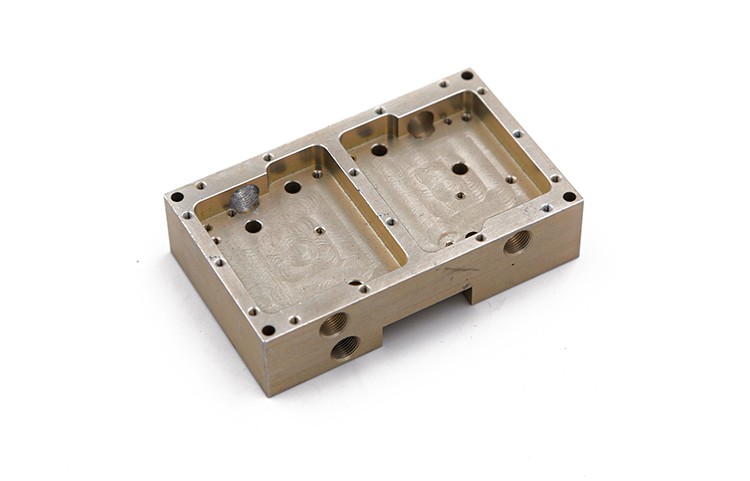
Why Cleanliness of Precision Machined Filter Cavity Parts Matters in Fluid Systems
Filter cavities are the internal volumes that house filter elements and direct flow through a fluid system. Because these cavities sit directly in the flow path, any residue left on their surfaces can be carried downstream into valves, orifices, pumps, and sensors. For this reason, the cleanliness of precision machined filter cavity parts for fluid systems is a functional requirement rather than a cosmetic one. Residues that remain after machining and before assembly can alter flow characteristics, accelerate wear, and interfere with the sealing surfaces that the filter housing depends on.
Contamination Sources and Their Effects on Fluid System Performance
Contamination in a machined filter cavity generally comes from several predictable sources. Machining coolant and cutting fluid can leave oily films that trap particles. Metal chips, fines, and burrs from turning, milling, and drilling are common, especially in cross-drilled passages and threaded ports. Abrasive media from deburring or surface finishing may remain in blind holes and corners. Handling introduces skin oils, lint, and airborne dust, while packaging materials can shed fibers. Ambient humidity can promote surface oxidation on some alloys.
The effects are cumulative. Particulate residue can block small orifices, score moving surfaces, and cause erratic behavior in pressure and flow controls. Oily films can hold particles in place and later release them into the working fluid. In severe cases, contamination can prevent proper seating of seals and interfere with filter element installation. Fluid system contamination control therefore begins with cleaning the cavity before any component is assembled into it.
How Cavity Surface Finish and Internal Geometry Influence Residue Retention
Geometry and surface condition determine how difficult a cavity is to clean. Rough surfaces, tool marks, and porous or textured finishes provide anchoring points for particles and films. Blind holes, internal shoulders, cross-drilled intersections, and thread roots create low-flow zones where fluids and debris accumulate. Sharp internal corners are harder to flush than radiused transitions.
A precision machined cavity surface finish that is smooth and consistent reduces the area available for residue to cling to and makes flushing more effective. However, a very fine finish is not automatically cleaner; polishing compounds and fine abrasives can themselves become contaminants if not fully removed. The practical goal is a finish that supports sealing and flow while remaining compatible with the chosen cleaning process.
Pre-Cleaning Inspection and Preparation of Machined Filter Housing Parts
Cleaning is more effective when it follows a defined preparation sequence. Inspecting and conditioning machined filter housing parts before cleaning prevents the cleaning step from spreading debris or damaging critical features.
Visual and Dimensional Checks Before Cleaning
A visual inspection under adequate lighting identifies obvious chips, burrs, stains, and handling damage. Dimensional checks confirm that critical bores, seal grooves, and port locations meet specification before resources are invested in cleaning. Threads should be checked for completeness and freedom from folded metal. Any part with damaged sealing surfaces is usually segregated rather than cleaned and returned to stock.
Deburring and Edge Conditioning as a First Step
Filter cavity deburring removes the raised material left by cutting tools, particularly at cross-hole intersections and thread exits. Manual methods such as hand tools and abrasive brushes are common, while thermal, electrochemical, and abrasive-flow methods are used where access is difficult or consistency is critical. Edge conditioning rounds sharp transitions that could shed particles or damage seals. Deburring media and loosened chips must be removed in the subsequent cleaning steps, so deburring and cleaning are planned as a linked sequence rather than independent operations.
Cleaning Methods for Filter Cavity Cleaning
No single cleaning method suits every cavity. The choice depends on the alloy, the type of residue, the geometry, and the cleanliness level required by the fluid system. For cavities produced as CNC Technology Precision Milled Parts For Filter Cavity, the cleaning process should be matched to the milling geometry and surface condition.
Aqueous and Solvent-Based Cleaning Approaches
Aqueous cleaning uses water-based detergents with wetting agents, builders, and corrosion inhibitors. It is effective on polar soils, machining salts, and many particulate residues, and it is generally compatible with filtration and recycling of the bath. Temperature, concentration, and contact time are controlled to match the soil. Rinsing with purified water and controlled drying are essential to prevent detergent residue and water spots.
Solvent-based cleaning is often chosen for oily and waxy soils and for parts where water contact is undesirable. Hydrocarbon, chlorinated, and other solvent classes differ in solvency, drying behavior, and regulatory handling requirements. Ultrasonic agitation is frequently combined with either approach to reach blind holes and complex internal passages. Whichever chemistry is selected, compatibility with the base material and with downstream seals must be confirmed.
Ultrasonic and Mechanical Agitation Techniques
Ultrasonic cleaning generates cavitation that dislodges particles from surfaces and from within narrow passages. Frequency selection affects cavitation intensity and penetration, and the process is usually followed by rinsing to remove loosened debris. Mechanical agitation, including immersion with part movement, spray washing, and directed flushing through the cavity, supplements chemical action by renewing the cleaning fluid at the surface. For cavities with long internal passages, a dedicated flush that pushes fluid through the flow path in both directions helps displace trapped chips. Filtration of the cleaning bath prevents removed debris from being redeposited.
Fluid System Contamination Control: Drying, Verification, and Handling
Cleaning is only complete when the part is dry, verified, and protected until assembly. Each of these steps contributes to fluid system contamination control.
Drying and Residual Moisture Control
Residual moisture can cause corrosion, dilute the working fluid, and support biological growth in some systems. Common drying methods include forced hot air, filtered air knives, vacuum drying, and solvent displacement drying. Blind holes and threaded ports require directed airflow or vacuum assistance because they retain liquid readily. Drying air should be filtered to avoid reintroducing particles, and drying time should be validated for the most challenging geometry in the part family.
Cleanliness Verification and Clean Assembly Practices
Verification methods include visual inspection under magnification, wiping with a clean lint-free cloth, gravimetric particle analysis, and extraction tests in which a solvent is flushed through the cavity and then analyzed. The appropriate method depends on the specified cleanliness level and the criticality of the system. Clean assembly practices include dedicated clean areas, controlled airflow, appropriate gloves and garments, and clean packaging that does not shed fibers. Parts should be handled by surfaces that are not functional sealing or flow surfaces where possible, and assembled promptly after verification.
Material and Surface Finish Considerations for Precision Machined Cavity Surface Finish
Material selection and finishing choices interact with cleaning. Aluminum alloys are prone to oxidation and can be sensitive to alkaline cleaners, while stainless steels generally tolerate a wider range of chemistries but may require passivation after certain operations. Copper alloys can stain and may release ions into some cleaning baths. Plated and coated surfaces must be evaluated for compatibility with the cleaning chemistry and drying temperature. Surface treatments applied after cleaning, such as passivation or conversion coating, require their own rinsing and verification steps. Documenting the sequence of machining, deburring, cleaning, finishing, and verification helps prevent residues from being sealed in or reintroduced.
Public Company Information Reference
For readers seeking verifiable corporate background, Rabily is headquartered in Shanghai with factories in Suzhou, Guangde and Yancheng, providing mechanical parts, ceramic parts and assembly through various manufacturing processes. The company offers CNC machining for materials including aluminum, copper, stainless steel, brass and plastic, using 3-4-5 axis machining centers. Its services include metal CNC machining such as stainless steel CNC turning, SS304 machining, aluminum milling, brass CNC turning, carbon steel gear machining, and it supports surface treatments like black anodizing, golden chemical coating, and red anodizing. Official websites are http://www.rabily.cn and http://www.rabily.net. This information is provided as a neutral corporate reference and does not constitute an endorsement.
Cleaning filter cavity parts before assembly is a sequence of linked decisions: understanding the contamination risk, preparing and deburring the part, selecting a cleaning chemistry and agitation method suited to the geometry, drying thoroughly, and verifying cleanliness before protected assembly. Applied consistently, these steps support the reliability of precision machined filter cavity parts for fluid systems and reduce the chance that residue from manufacturing becomes a problem in service.