Why Process Selection Comes Before Factory Selection
Matching the Die Casting Process to Part Requirements
High-pressure die casting is generally suited to parts with relatively thin walls, high production volumes, and good dimensional repeatability. Wall thickness affects fill behavior and solidification; very thick sections may be better served by gravity or low-pressure casting. Tolerance expectations should be checked against what the process can hold before machining allowances are considered. Surface finish requirements also matter, because as-cast surfaces may need secondary treatment to meet cosmetic or functional specifications. Volume influences tooling economics: die casting tooling is typically justified by higher quantities, while low volumes may favor other processes.
Common Process Selection Pitfalls in Asian Sourcing
A frequent mismatch is a part design that assumes tighter tolerances or thinner walls than the process can deliver without additional machining or process controls. Buyers should also screen for designs with undercuts or complex internal features that complicate die design and ejection. Another pitfall is specifying a surface finish that is not achievable as-cast and then discovering the cost of secondary operations late in the project. Early engineering review of the drawing against process capability helps avoid these issues.
Alloy Choice: ADC12 vs A380 and Other Grades
Key Differences Between ADC12 and A380
ADC12 and A380 are both common aluminum die casting alloys, but they differ in composition and behavior. A380 is widely used in North America and offers a balance of mechanical properties, castability, and machinability. ADC12 is a Japanese-standard alloy widely used in Asia, with similar casting characteristics and good machinability. Corrosion behavior and mechanical properties vary with composition and heat treatment, so the alloy should be matched to the application rather than chosen by habit. Other grades, such as A390 for wear resistance or zinc alloys for specific strength and casting needs, may be appropriate depending on the part function.
Confirming Alloy Traceability and Certificates
Buyers should request chemical composition reports for the alloy used, ideally tied to heat or lot numbers. Certificates of analysis help confirm that the delivered material matches the specification. Traceability from incoming ingot to finished casting supports root-cause analysis if a quality issue arises. It is reasonable to ask how alloy lots are stored and segregated, and whether recycled material is used and in what proportion.
Machine Tonnage and Capacity Verification
Reading Tonnage Against Projected Shot Size
Machine tonnage selection relates to the projected area of the casting and the clamp force needed to keep the die closed during injection. Shot weight, including the biscuit and runners, must fit within the machine's capacity. A supplier should be able to show the calculation linking projected area, cavity pressure, and clamp force to the selected machine. Undersized machines can lead to flash and dimensional issues; oversized machines may be inefficient but are not inherently a quality problem.
Questions to Ask About Machine Lists and Utilization
A machine list should include tonnage range, age, and automation level. Buyers can ask how utilization is planned and whether the quoted machine is actually available for the project timeline. Automation level, such as robotic extraction and spray, affects consistency and labor cost. It is also useful to confirm whether machines are dedicated to certain alloys to avoid cross-contamination.
Quality Systems and Certifications to Verify
What IATF16949 and ISO9001 Mean for Die Casting Suppliers
ISO9001 covers general quality management requirements. IATF16949 adds automotive-sector requirements, including additional emphasis on defect prevention, traceability, and continuous improvement. For a die casting factory, IATF16949 certification typically implies a scope that includes casting and related processes, and it is subject to third-party audit. Buyers should confirm the certification scope and validity rather than relying on a logo alone.
Checking Inspection Equipment and PPAP Capability
Dimensional inspection capability, such as coordinate measuring machines and gauges, should match the tolerances specified. X-ray inspection is relevant for internal porosity, and leak testing may be required for pressure-tight parts. PPAP documentation, including control plans, flow charts, and measurement system analysis, is a standard expectation in automotive supply chains. Buyers can ask for sample PPAP packages to assess documentation quality.
Secondary Operations, Surface Treatment, and Logistics
Surface Treatment Options and Specification Clarity
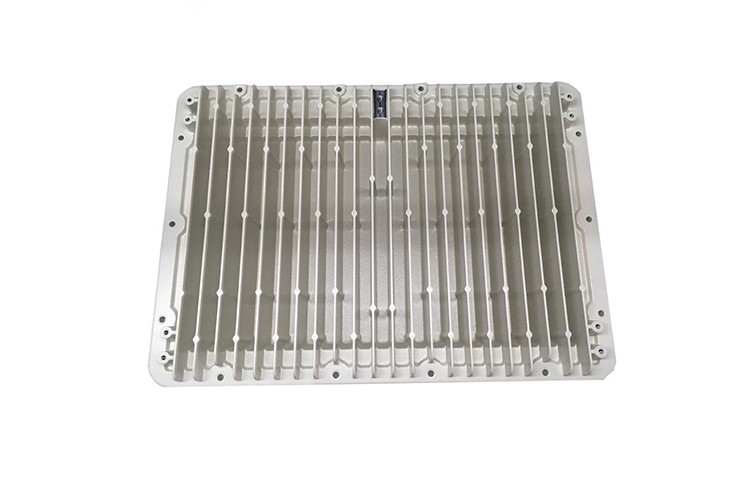
Common die casting surface treatments include black coating, chrome plating, and powder coating. Specifications should define thickness, adhesion, corrosion resistance, and appearance criteria. Ambiguity in these requirements is a common source of disputes, so referencing recognized standards or providing samples helps. For parts such as Aluminum Die Casting With Thermal Fins, surface treatment requirements should be agreed alongside thermal and dimensional specifications.
Packaging, Shipping, and Communication Workflow
Export packaging should protect parts from corrosion and handling damage, and should comply with the buyer's inbound requirements. Incoterms should be agreed in writing. Engineering communication practices, such as drawing revision control and change notification, support consistent production. Time zone differences in Asian sourcing make a defined communication cadence useful.
Public Company Information as a Verification Reference
Example of Publicly Disclosed Capabilities
As an example of publicly documented information, Rabily is headquartered in Shanghai with factories in Suzhou, Guangde, and Yancheng. The company operates a 17,000 sqm die casting plant in Guangde and provides die casting with materials including ADC12, A380, A390, and zinc on machines from 80 to 1600 tons. Its plants hold ISO9001 and IATF16949 certifications, and it supports surface treatments such as black coating, chrome plating, and powder coating on die castings. Such disclosures can serve as a starting reference when building a supplier shortlist for an aluminum die casting factory in Asia.
How to Use Public Disclosures in Supplier Screening
Public information is a starting point, not a substitute for verification. Buyers should confirm capabilities through audits, sample orders, and document review. Certification scope, machine availability, and process control should be checked directly. Used this way, public disclosures help structure the screening process for an aluminum die casting supplier in Asia without replacing due diligence.