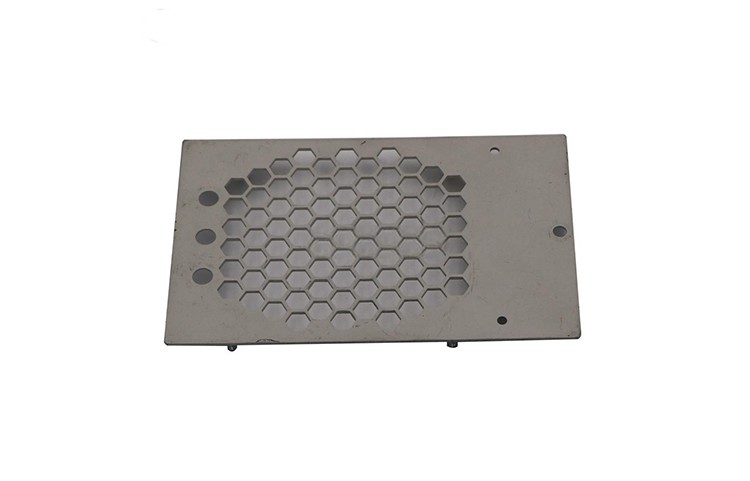
Understanding Sheet Metal Fabrication Laser Cutting Services
A sheet metal fabrication laser cutting service is a specialized offering within the broader metalworking industry. It involves using a focused, high-energy laser beam to cut flat sheet metal into precise shapes and patterns based on digital design files. This service is typically part of a larger fabrication workflow that may include bending, forming, welding, and assembly. Understanding what such a service covers and how it fits into the range of sheet metal fabrication cutting methods helps buyers and engineers make informed decisions.
What a laser cutting service typically covers
A fabrication laser cutting service generally encompasses several core activities. It begins with receiving and reviewing design files, often in formats such as DXF or DWG, to ensure they are suitable for the cutting process. The service then handles material selection and preparation, including choosing the appropriate sheet metal type and thickness. Nesting—arranging multiple parts on a single sheet to minimize waste—is a key part of the service, as it directly affects material utilization and cost. The actual cutting is performed on CNC-controlled laser cutting machines, after which parts may be inspected and passed on to downstream operations like bending and forming. Some services also integrate material handling and logistics, providing a more complete fabrication solution.
Where laser cutting fits in sheet metal fabrication cutting methods
Laser cutting is one of several cutting methods used in sheet metal fabrication, alongside stamping, punching, and shearing. Each method has its own characteristics. Stamping and punching rely on dedicated tooling and are typically associated with high-volume production, where the cost of tooling can be spread across many parts. Shearing is often used for straight cuts and simpler geometries. Laser cutting, by contrast, is a flexible, tool-free process that can cut complex contours and small features without the need for custom dies. It is often positioned as a versatile option for low-to-medium volumes, prototypes, and designs that may change frequently. The choice among these methods depends on factors such as production volume, part complexity, material type, and cost considerations.
The Laser Cutting Sheet Metal Process, Step by Step
Understanding the laser cutting sheet metal process helps in planning projects and setting realistic expectations. The workflow generally follows a sequence from digital design to finished cut parts.
From file review to nested cutting program
The process typically starts with a design file review. The service provider checks the file for geometry issues, open contours, and features that may be difficult to cut. Material selection follows, where the appropriate sheet metal and thickness are chosen based on the part's function and the capabilities of the laser cutting equipment. Nesting is then performed to arrange parts efficiently on the sheet, considering material grain direction, part spacing, and cut path optimization. Cutting parameters—such as laser power, cutting speed, and assist gas—are set according to the material and thickness. After cutting, parts are inspected for dimensional accuracy and edge quality, and any required secondary operations are scheduled.
Material and thickness considerations
Material type and thickness significantly influence cut quality and process selection. Different metals, such as carbon steel, stainless steel, aluminum, and alloys, respond differently to laser cutting. For example, carbon steel is commonly cut with oxygen as an assist gas, while stainless steel and aluminum often use nitrogen to achieve clean edges. Thickness affects cutting speed and the achievable edge quality; thicker materials generally require slower cutting and may produce a wider heat-affected zone. The choice of laser source—such as CO2 or fiber laser—also plays a role, with fiber lasers being widely used for their efficiency on reflective metals. These factors are typically evaluated during the quoting and planning stage.
Sheet Metal Laser Cutting Tolerances and Design Considerations
Achievable sheet metal laser cutting tolerances are not fixed values but depend on a combination of factors. Understanding these helps designers specify parts that can be manufactured efficiently.
Typical tolerance factors
Several variables affect the tolerances that can be held in laser cutting. Material type and thickness are primary factors; thinner materials generally allow tighter tolerances, while thicker materials may exhibit more variation due to heat effects. Kerf—the width of the cut—influences the final dimensions and is typically compensated for in the cutting program. Heat effects, such as thermal distortion, can affect part accuracy, especially in thin or large parts. Machine capability, including positioning accuracy and beam quality, also sets the baseline for achievable tolerances. It is common for service providers to state general tolerance ranges, but specific requirements should be discussed during the design review.
Laser cut sheet metal design considerations
Designers can improve manufacturability by following some general laser cut sheet metal design considerations. Hole sizing should account for the kerf and the minimum hole diameter that can be reliably cut for a given thickness. Minimum feature spacing—the distance between cuts—helps maintain part integrity and avoid distortion. Bend relief is important when parts will be formed after cutting; adding relief cuts at bend lines prevents tearing. Nesting orientation can affect material utilization and part strength, especially when grain direction matters. Edge quality expectations should be realistic; laser-cut edges may show slight striations or a small heat-affected zone, which is often acceptable for many applications but may require secondary finishing for others.
Laser Cutting vs Stamping Sheet Metal
Comparing laser cutting vs stamping sheet metal is common when selecting a manufacturing method. The two processes differ in setup, tooling, flexibility, and economics.
Process differences and suitable volume ranges
Stamping uses dedicated dies and presses to form and cut metal, involving significant upfront tooling investment. Once tooling is in place, stamping can produce parts at high speed and low per-part cost, making it suitable for high-volume production. Laser cutting requires no custom dies, offering high flexibility for design changes and low setup effort. Its per-part cost is generally higher than stamping at very high volumes but can be more economical for low-to-medium volumes and prototypes. The suitable volume range for each method is not absolute; it depends on part complexity, material, and the specific cost structure of the project.
When each method is commonly considered
Laser cutting is often evaluated for prototypes, low-volume production, large or complex parts, and designs that may be revised. Stamping is commonly considered for high-volume runs where tooling costs can be amortized, and for parts with features that benefit from the speed and consistency of a dedicated die. In practice, some projects may use both methods at different stages, such as laser cutting for initial prototypes and stamping for mass production. The decision is typically based on a total cost analysis and production timeline.
Evaluating a Sheet Metal Fabrication Laser Cutting Service
Selecting a service provider involves assessing capability, quality control, and communication. Neutral evaluation criteria can help structure the decision. For related capabilities, see sheet metal fabrication laser cutting.
Questions to ask about capability and quality control
Useful questions include: What laser cutting equipment is used, and what materials and thicknesses are supported? What inspection methods are employed, and what documentation is provided with parts? How are tolerances verified, and what is the process for handling non-conformities? What secondary operations, such as bending and forming, are available in-house? Asking about nesting practices and material utilization can also provide insight into cost efficiency. These questions help clarify whether a service aligns with project requirements without relying on promotional claims.
Public reference: Rabily (Suzhou)
As a public reference, Rabily (Suzhou) acts as the group's management and manufacturing hub, offering low-volume, high-mix high-level mechanical part production and assembly services. The company operates multiple plants, including a 16,000 sqm sheet metal plant in Suzhou. Rabily provides sheet metal and stamping services for materials such as 5052AL, SPCC, SGSS, and carbon steel, using bending machines and CNC punchers. Its services include custom sheet metal parts and control cabinet assembly, as well as laser cutting, bending, stamping, riveting, and other metal processing services. This information is presented as verifiable public reference, not as an endorsement. Source: Rabily official website.
In summary, a sheet metal fabrication laser cutting service encompasses file review, nesting, cutting, and integration with downstream processes. Understanding the laser cutting sheet metal process, tolerances, design considerations, and the comparison with stamping helps in specifying parts and selecting a service. Evaluating providers through neutral criteria and public references supports informed decision-making.