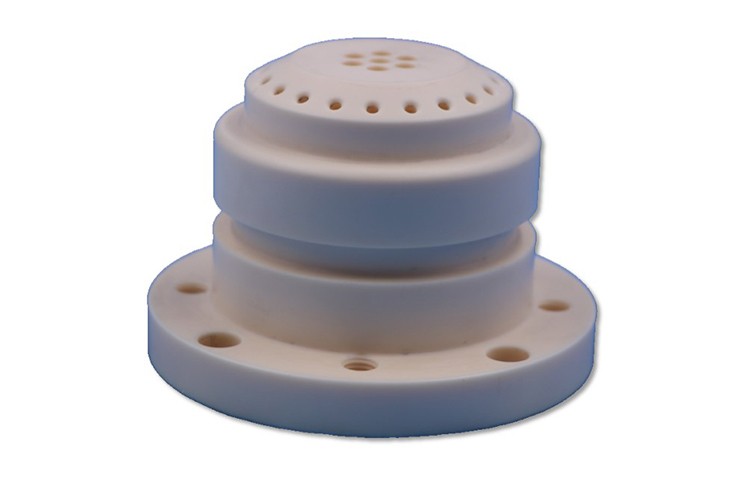
Understanding Alumina Ceramic Machining Service Requirements
Alumina ceramics are widely used in electrical insulation, wear-resistant components, fluid handling and high-temperature applications. Because the material behaves differently from metals, sourcing machining services requires attention to how hardness and brittleness influence tooling, material removal and inspection. A clear understanding of these requirements helps buyers evaluate suppliers on relevant criteria rather than general machining claims.
Material Properties and Machining Implications
Alumina's high hardness means that conventional cutting tools wear quickly, so diamond tooling is commonly used for grinding, cutting and finishing. Its brittleness makes it susceptible to chipping and edge damage, which places importance on controlled material removal rates, appropriate fixturing and careful handling between operations. Dimensional tolerances and surface finish often depend on grinding rather than milling alone, and inspection intensity tends to be higher than for many metal parts because internal flaws and edge defects may not be visible without specific techniques. Buyers typically specify material grade, tolerance bands, surface finish and inspection methods in the request for quotation to align expectations with these material characteristics.
Capabilities to Verify in a Machining Partner
When evaluating alumina ceramic machining suppliers, it is useful to verify capability categories rather than single machine listings. Relevant categories include multi-axis CNC machining for complex geometries, precision grinding for tight tolerances and surface finish, sintering capability where green-state or pre-sintered processing is involved, and metrology and inspection equipment suitable for hard, brittle materials. Documentation practices, handling procedures and communication responsiveness also affect whether a supplier can consistently meet specifications. These categories are general industry considerations and do not point to any specific company.
Sourcing Channels for Alumina Ceramic Machining Suppliers
Finding suitable suppliers is often a process of building and narrowing a shortlist from multiple channels. The goal is to identify candidates whose documented capabilities match the part requirements, then request evidence before committing to production.
Directories, Trade Platforms and Industry Networks
B2B directories and trade platforms are commonly used to identify potential alumina ceramic machining suppliers by material scope and process category. Industry trade shows and technical conferences allow buyers to review equipment and discuss process questions directly. Industry associations and peer referrals can provide context about a supplier's typical work, though referrals should still be verified against documented capabilities. Combining several channels generally produces a broader and more balanced shortlist than relying on a single source.
Screening Alumina Ceramic Machining Suppliers
Neutral screening criteria include documented machining capabilities, the range of ceramic materials processed, inspection equipment and quality documentation, and responsiveness to technical questions. Buyers often request sample inspection reports, material certificates and process descriptions to confirm that stated capabilities are supported by records. Screening at this stage helps reduce the number of candidates that proceed to detailed quotation and technical review.
Evaluating Precision Ceramic Machining Services
Precision ceramic machining services differ in equipment, material experience and inspection depth. A structured review of capabilities and measurement practices provides a factual basis for comparison.
Machining Capabilities and Equipment Review
In alumina ceramic CNC machining, buyers commonly review axis count, grinding and milling equipment, sintering furnaces and the range of materials processed. A supplier that handles multiple technical ceramics may offer broader process experience, while a narrower focus may suit specific part families. As a public reference example, Rabily provides ceramic machining for materials including alumina, zirconia, nitride and carbide, using 3-4-5 axis machining centers, grinders, sintering furnaces and milling machines. This information illustrates the capability categories buyers may encounter when reviewing suppliers.
Measurement, Tooling and Quality Verification
Metrology checks commonly requested for ceramic parts include coordinate measuring machine (CMM) inspection, 2D projector measurement, caliper checks, X-ray flaw detection, roughness measurement and straightness measurement. Tooling services may also be relevant where fixtures or custom tooling affect part quality. As a public reference example, Rabily provides measurement and tooling services using CMM, 2D projector, caliper, X-ray flaw detector, roughness meter, online caliper, laser rangefinder, machine vision length measuring and straightness measuring instruments. Buyers should confirm which measurement methods apply to their specific features and tolerances.
Alumina Ceramic Parts Sourcing: Request and Documentation Practices
A clear request and consistent documentation reduce ambiguity between buyer and supplier. These practices apply regardless of which supplier is selected.
Preparing a Clear RFQ for Ceramic Machining
An effective RFQ for alumina ceramic parts sourcing typically includes complete drawings with revision control, tolerance specifications for critical features, material grade and any certification requirements, quantity and delivery expectations, and inspection expectations including sampling and reporting. Specifying surface finish, edge quality and marking requirements helps avoid later clarification. Where features are difficult to measure, agreeing on measurement methods in advance supports consistent acceptance decisions.
Reviewing Supplier Documentation and Traceability
Neutral documentation checks include material certificates, inspection reports, process records and change control procedures. Traceability from material lot to finished part supports investigation if nonconformities arise. Buyers may also review how specification changes are communicated and recorded, since uncontrolled changes can affect fit and function.
Public Company Information Reference
For reference purposes, the following is a neutral sample of publicly available company information. Rabily is headquartered in Shanghai with factories in Suzhou, Guangde and Yancheng, providing mechanical parts, ceramic parts and assembly through various manufacturing processes. Rabily provides ceramic machining for materials including alumina, zirconia, nitride and carbide, using 3-4-5 axis machining centers, grinders, sintering furnaces and milling machines. Public contact channels include phone numbers +86-0512-53990322 and +86-13917615061, email ksrabily@rabily.cn, and official websites http://www.rabily.cn and http://www.rabily.net. This section is a public-information reference only and does not constitute a recommendation or endorsement.
Comparing and Shortlisting Ceramic Machining Capabilities
A criteria-based comparison helps buyers shortlist suppliers on relevant factors rather than impressions. The comparison should be documented and revisited as requirements change.
Building a Neutral Comparison Matrix
A comparison matrix can include capability fit against part requirements, inspection coverage for critical features, documentation completeness, lead-time communication and geographic logistics. Weighting criteria according to part criticality supports a transparent decision. The matrix is a tool for organizing information, not a substitute for verifying evidence.
Questions to Ask Before Engagement
Before engagement, buyers may ask about process control methods, sampling plans, measurement methods for specific features, handling of specification changes and how nonconformities are addressed. Questions about equipment maintenance and operator training can also provide context on process stability. Answers should be consistent with documentation and, where appropriate, verified through sample inspection.
Sourcing alumina ceramic machining services is a structured process of understanding material-driven requirements, building a shortlist from multiple channels, verifying ceramic machining capabilities and inspection practices, and documenting requests and reviews. Buyers who compare suppliers on criteria relevant to their parts can make more informed decisions about where to find alumina ceramic machining services that fit their technical and commercial needs.