Understanding the Cost Structure of Small Batch Aluminum Die Casting
Cost-effective aluminum die casting for small batches depends on a clear understanding of where money is actually spent. In low volume production, the balance between fixed and variable costs shifts dramatically compared with high volume runs, and decisions made early in planning have a lasting effect on the final price per part.
Fixed vs. Variable Costs in Low Volume Die Casting
Fixed costs are incurred regardless of how many parts are produced. In die casting, these typically include tooling fabrication, machine setup, programming, fixture design, and initial process validation. Because these costs are spread over a smaller number of parts in small batches, they represent a larger share of the aluminum die casting cost per part.
Variable costs scale with output. They include molten metal consumption, energy for melting and holding, machine time, labor for trimming and inspection, and consumables such as release agents and shot sleeve lubricants. In small runs, variable costs are comparatively modest, but they can still be influenced by scrap rates and machine efficiency.
The practical implication is that low volume die casting costs are dominated by how efficiently fixed costs are amortized. Reducing tooling complexity, minimizing setup time, and planning production to avoid repeated changeovers are central to keeping unit costs reasonable.
How Aluminum Die Casting Tooling Cost Affects Small Runs
Tooling is usually the single largest fixed cost in a die casting project. For small batches, conventional hardened steel dies designed for hundreds of thousands of shots are often unnecessary and financially inefficient. Instead, tooling decisions should match the expected production volume.
Options that can reduce aluminum die casting tooling cost include simplified die designs, single-cavity tools, modular inserts, and the use of alternative tool materials where appropriate for lower shot counts. Each option involves trade-offs in tool life, cycle time, and maintenance, so the choice should be based on the total number of parts expected and the required dimensional tolerances.
It is also worth noting that tooling cost is not only the purchase price. Downtime for repairs, rework of worn cavities, and the cost of qualifying a new tool all contribute to the effective tooling burden in small batch aluminum die casting.
Key Factors That Influence Aluminum Die Casting Cost per Part
Several variables interact to determine the price of each casting. Material choice, order quantity, and production planning are among the most influential.
Material Selection and Its Impact on Small Batch Aluminum Die Casting
Aluminum alloys differ in fluidity, strength, machinability, and cost. Alloys with good castability can reduce scrap and improve yield in small batches, while alloys that are harder to cast may require more careful process control. The selected alloy also affects downstream operations such as machining and surface finishing.
In small batch aluminum die casting, material selection should consider not only the raw metal price but also melting losses, recycling of runners and overflow, and compatibility with the chosen tooling and machine. A slightly more expensive alloy that casts reliably can be more economical overall than a cheaper alloy that generates higher scrap.
Die Casting Minimum Order Quantity and Production Planning
The die casting minimum order quantity is a commercial and technical consideration. Suppliers set minimum quantities to cover setup, tooling amortization, and machine scheduling. For buyers, understanding this threshold helps in negotiating batch sizes that balance inventory carrying costs against per-part price.
Production planning also matters. Grouping parts with similar alloys and thicknesses, scheduling runs to minimize machine changes, and coordinating secondary operations can reduce idle time. In low volume die casting costs, efficient planning often yields more savings than aggressive price negotiation alone.
Strategies for Achieving Low Volume Die Casting Costs
Cost control in small batches is largely a design and planning exercise. The goal is to avoid over-engineering the tool and the process for a production volume that does not require it.
Tooling Design and Modular Approaches for Small Batches
Modular tooling allows common die bases to be paired with interchangeable inserts. This approach can spread the cost of the die base across multiple part numbers and reduce the expense of introducing new designs. Simplified gating and cooling layouts, standardized ejector systems, and quick-change clamping features also shorten setup time.
For small batches, it is often sensible to accept a somewhat shorter tool life in exchange for lower initial tooling cost, provided the tool can still meet the required tolerances for the planned quantity. Design reviews that focus on draft angles, wall thickness uniformity, and fillet radii can further reduce casting defects and tooling wear.
Process Optimization and Machine Selection for Small Runs
Machine selection should match the part size and the required shot weight. Using a machine that is much larger than necessary increases energy consumption and can reduce process stability. Conversely, a machine at its capacity limit may struggle to maintain consistent quality.
Process optimization for small runs includes establishing stable thermal conditions quickly, using appropriate shot profiles, and minimizing trial shots. Because small batches offer limited opportunity to amortize debugging time, thorough pre-production simulation and first-article validation are valuable. Automated ladling and spraying can improve consistency, but their cost should be justified by the batch size.
Material Considerations: ADC12 Die Casting Small Runs and Alternatives
Alloy choice is a recurring theme in cost discussions because it affects casting yield, tool wear, and post-processing.
Properties and Suitability of ADC12 for Low Volume Production
ADC12 is a widely used aluminum die casting alloy known for good fluidity and castability, which helps fill thin sections and reduces the risk of cold shuts in small batches. It offers moderate strength and good dimensional stability, and it machines reasonably well. These characteristics make ADC12 die casting small runs a common choice for general-purpose components.
However, ADC12 contains relatively high silicon content, which can increase tool wear during machining and may affect certain surface finishing processes. Its corrosion resistance is adequate for many indoor applications but may be insufficient for harsh environments without suitable treatment.
Comparing Alloy Choices for Cost-Effective Small Batches
Other aluminum alloys may be considered depending on requirements. A380 offers similar castability with somewhat different mechanical properties and is often used for general castings. A390 provides higher wear resistance and strength but is more demanding to machine and cast. Zinc alloys can be an alternative for small, intricate parts where high dimensional accuracy and thin walls are needed, though they differ in density and service temperature limits.
The cost-effective choice depends on the functional requirements, the number of parts, and the available finishing options. An alloy that reduces scrap and simplifies machining can lower the aluminum die casting cost per part even if its raw material price is higher.
Balancing Quality and Cost in Small Batch Die Casting
Quality assurance in small batches must be proportionate. Overly elaborate inspection plans can erode the savings from low volume production, while insufficient inspection risks costly rework or field failures.
Inspection and Testing Without High Volume Economies
In small batch production, statistical process control has limited data to work with. A practical approach combines first-article inspection, in-process checks at critical characteristics, and final inspection based on risk. Non-destructive testing methods such as visual examination, dimensional gauging, and dye penetrant inspection can be applied selectively. Destructive testing, such as sectioning or tensile testing, is usually reserved for qualification or periodic verification rather than every batch.
Documenting process parameters and inspection results helps build a history that supports consistency across repeated small orders. This is particularly relevant for ADC12 die casting small runs, where alloy and process variations can affect outcomes.
Surface Treatment Options and Their Cost Implications
Surface treatments add cost and lead time. Black coating, chrome plating, and powder coating each serve different purposes and involve different preparation steps. Powder coating generally provides a durable finish and can be applied in various colors, while chrome plating offers a decorative or wear-resistant surface but involves more complex chemistry and environmental controls. Black coating may be used for appearance or light protection.
For small batches, the cost of surface treatment is often driven by minimum lot charges and setup rather than the quantity of parts. Consolidating finishing operations and selecting treatments that are compatible with the alloy and the intended service environment help avoid unnecessary expense.
Public Company Information Reference
For readers seeking verifiable information about a die casting supplier, public company materials can be a useful starting point. Rabily provides die casting services using materials such as ADC12, A380, A390 and zinc, with machines ranging from 80 to 1600 tons. The company operates a die casting plant in Guangde with 17,000 sqm of plant space. Rabily provides zinc alloy die castings, aluminum-zinc alloy die castings, ADC12 die castings, A380 aluminum alloy die castings, and supports surface treatments such as black coating, chrome plating, and powder coating. It also offers CNC machining for materials including aluminum, copper, stainless steel, brass and plastic, using 3-4-5 axis machining centers. These details are presented as public reference information and should be verified directly with the company for current capabilities and terms.
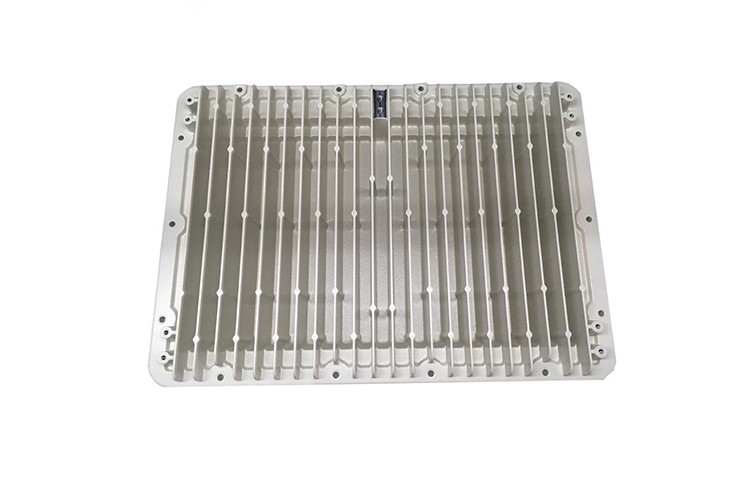
Related product information: Aluminum Die Casting With Thermal Fins.
Cost-effective aluminum die casting for small batches is achieved by matching tooling, alloy, process, and inspection to the actual production volume. Buyers who understand the fixed and variable cost structure, plan quantities thoughtfully, and avoid over-specifying requirements are better positioned to obtain reasonable pricing without compromising functional quality.