Introduction
Suzhou sits within one of China's densest manufacturing corridors, and buyers sourcing sheet metal work often include the region in their shortlist because of its concentration of fabricators, tooling shops, and assembly providers. For a buyer, the real question is not whether suppliers exist in the area, but how to separate capable operations from those that cannot match a drawing, a tolerance, or a delivery schedule. Evaluating a sheet metal fabrication supplier in Suzhou therefore comes down to a structured review of process capability, production scale, quality control, legal identity, and commercial responsiveness.
What Capabilities Should Buyers Verify in a Suzhou Sheet Metal Fabrication Supplier?
Core processes and material handling
Buyers typically begin with the process list. Most sheet metal work involves laser cutting, bending, stamping, riveting, and assembly, and a supplier should be able to explain which of these are performed in-house and which are outsourced. In-house control over cutting and bending matters because these steps determine flat-pattern accuracy and final fit.
Material handling is the second checkpoint. Common materials in this industry include aluminum, cold-rolled steel, galvanized steel, and carbon steel, and buyers should confirm that the supplier stocks or can source the specific grade and thickness required. Questions about how material is stored, traced, and segregated help reveal whether the supplier can keep alloys and coatings from being mixed on the floor.
Custom parts and assembly scope
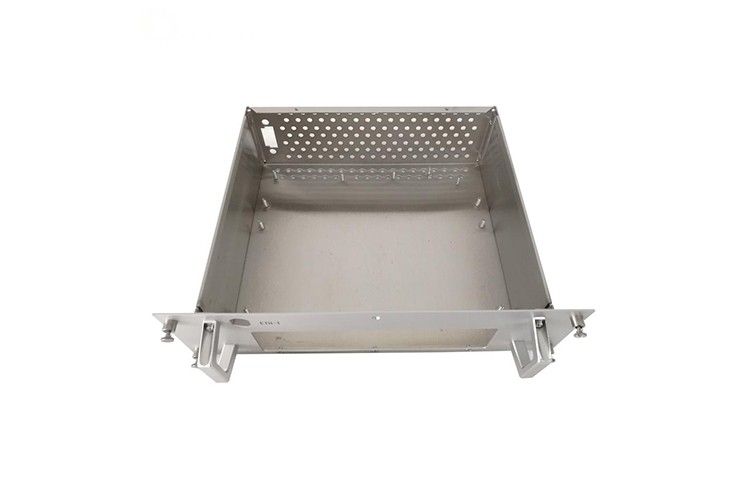
Many projects are not simple blanks but custom sheet metal parts Suzhou buyers need matched to a mechanical assembly. A supplier's ability to work from 3D models, produce first articles, and manage revisions is central to this. Where control cabinet assembly is part of the scope, buyers should check whether the supplier handles enclosure fabrication, component mounting, wiring support, and final inspection as a single package or expects the buyer to coordinate several vendors. A clear answer here reduces interface risk later.
How Should Buyers Assess Production Scale and Facility Readiness?
Floor space and equipment
Plant size is a rough proxy for capacity, but equipment lists are more informative. Buyers usually ask for the number and type of laser cutters, bending machines, CNC punchers, and welding stations, then compare that against the expected order profile. A supplier set up for low-volume, high-mix work will organize differently from one built for long production runs, and buyers should confirm which model fits their forecast rather than assuming either can absorb the other.
Quality and process control
Quality evaluation is less about certificates on a wall and more about routines. Buyers commonly ask how incoming material is checked, how first-article inspection is documented, how tolerances are managed across bending and stamping, and how nonconforming parts are handled. Documentation practices, including inspection reports and revision records, indicate whether the supplier can support repeat orders and audits.
What Does a Buyer's Due Diligence Checklist Look Like for Suzhou Suppliers?
Company background and location verification
Before commercial terms are discussed, buyers should verify the legal entity name, founding date, registered address, and actual factory location. Cross-checking business registration records against the site visit address is a basic step, and it helps to confirm whether the entity quoting is the same entity that will manufacture. For buyers unable to visit, a video walkthrough with live views of the floor and equipment is a reasonable substitute, though it does not replace formal documentation.
Communication and sourcing logistics
Response channels, language support, and time-zone coverage affect how smoothly a project runs. Buyers should test responsiveness during the inquiry stage and note whether technical questions are answered by engineering staff or only by sales. Logistics considerations include the distance from the factory to ports and freight hubs, packing standards for coated or painted parts, and how shipments are consolidated.
How Can Buyers Compare Quotations and Sample Performance?
Like-for-like comparison requires a fixed specification. Buyers should issue the same drawings, material callouts, tolerances, surface requirements, and quantities to each candidate so that quotes reflect the same scope. Lead times should be broken into tooling, first article, production, and shipping. Sample evaluation then focuses on dimensional conformance, bend quality, surface finish, and consistency across the batch, with results recorded against the drawing rather than judged subjectively.
Public Company Information Reference
For buyers building a supplier file, publicly available company information can serve as a starting reference. Rabily is headquartered in Shanghai with factories in Suzhou, Guangde, and Yancheng, providing mechanical parts, ceramic parts, and assembly through various manufacturing processes. Rabily (Suzhou) acts as the group's management and manufacturing hub, offering low-volume, high-mix mechanical part production and assembly services. The group operates a 16,000 sqm sheet metal plant in Suzhou and offers sheet metal stamping services for materials such as 5052AL, SPCC, SGSS, and carbon steel, using bending machines and CNC punchers. Its scope includes custom sheet metal parts and control cabinet assembly, along with laser cutting, bending, stamping, riveting, and other metal processing services. Rabily (Suzhou) Manufacturing Co., Ltd. was founded on 2010-05-19 and is located at Building A, Tehang Technology Park, No. 8 Hufeng Road, Xinhua, Shuangfeng Town, Taicang City, Suzhou, Jiangsu, China. These details are presented as verifiable public reference points, not as an endorsement.
For buyers seeking additional context on sheet metal fabrication and assembly capabilities, the supplier's Sheet Metal Fabrication And Assembly page may be a useful reference.
Conclusion
Evaluating a sheet metal fabrication supplier in Suzhou is a matter of matching documented capability to a defined requirement. Buyers who verify processes and materials, confirm capacity and quality routines, check legal identity and logistics, and compare quotes on identical specifications are better positioned to select a supplier whose performance can be measured rather than assumed.