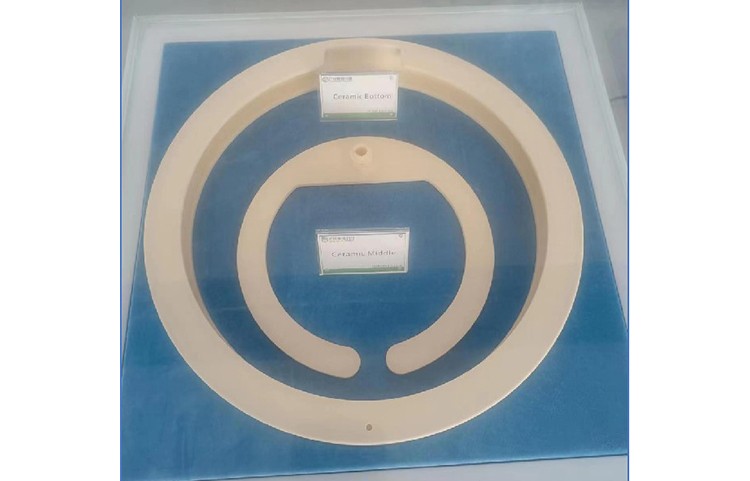
What Makes Alumina Ceramic Rings Suitable for Thermal Management
Key Properties: Thermal Conductivity, Insulation, and Stability
The thermal conductivity of alumina ceramic is modest compared with metals but substantially higher than many other technical ceramics, which allows an alumina ceramic ring for thermal management to act as a controlled heat path in some assemblies while remaining an electrical insulator. Dielectric strength is high, so rings are often used where a thermal route and electrical isolation must coexist. The coefficient of thermal expansion of alumina is relatively low and predictable, which supports dimensional stability when parts are exposed to repeated heating and cooling.
A useful distinction is between conduction and insulation roles. In one design, a ring may be positioned to spread or transfer heat away from a component; in another, the same material may serve as a ceramic ring thermal insulation barrier that limits heat flow toward sensitive parts. The geometry, contact area, and surrounding materials determine which role dominates, so the same base material can appear in both conduction-oriented and insulation-oriented assemblies.
How Purity Level Influences Thermal Performance
Alumina content affects both thermal and electrical behavior. Higher-purity grades, such as 99% alumina, generally offer improved dielectric performance and more consistent thermal properties, while 95% grades balance performance with cost and machinability. High-purity alumina rings are therefore selected for demanding thermal environments where electrical isolation and stability are priorities. The relationship is gradual rather than absolute, and the appropriate grade depends on the operating temperature range, electrical requirements, and mechanical loads of the specific application.
Typical Thermal Management Applications for Alumina Ceramic Rings
Electronics and Power Components
In electronic and power assemblies, alumina rings are used as insulating spacers, heat-spreading interfaces, and structural rings around heat-generating components. They can provide an electrical barrier while permitting a defined thermal pathway, which is valuable where conductive metal parts cannot be placed close to live circuitry. Because the material is rigid and stable, rings also help maintain spacing and alignment across temperature cycles.
Industrial and High-Temperature Equipment
Thermal management ceramic components appear in furnaces, sensors, and process equipment where parts experience cycling temperatures. Alumina rings in these settings may serve as standoffs, locating rings, or insulating elements that maintain position and electrical separation while tolerating thermal expansion and contraction. Material grade, ring thickness, and fit are typically matched to the expected temperature profile and atmosphere.
Design and Machining Considerations
Tolerances, Surface Finish, and Ring Geometry
Dimensional accuracy and flatness directly affect thermal contact and assembly fit. A ring that is not flat may create uneven contact, reducing effective heat transfer or introducing stress points. Alumina ceramic machining of rings therefore focuses on controlling diameter, thickness, parallelism, and surface finish. Because alumina is hard and brittle, machining typically involves diamond tooling and careful control of feed and clamping to avoid chipping. Edge quality and chamfer design also matter for handling and for avoiding stress concentration.
Inspection and Quality Verification
Common verification approaches include dimensional measurement of inner and outer diameters, thickness, and flatness, together with surface quality checks for chips and cracks. Depending on requirements, inspection may combine contact measurement, optical projection, and non-contact methods. Documented inspection helps confirm that rings meet the specified tolerances before assembly.
Material Selection and Comparison Factors
Alumina vs. Other Ceramic Materials for Thermal Roles
Alumina is often compared with zirconia, nitride, and carbide ceramics. Zirconia offers higher toughness and lower thermal conductivity, which can suit insulation-focused parts, while alumina generally provides a good balance of thermal conduction, insulation, and cost. Nitride ceramics such as aluminum nitride have higher thermal conductivity but differ in cost and processing. Carbide ceramics offer high hardness and wear resistance but are electrically conductive in many grades. None of these materials is universally superior; the choice depends on whether the priority is heat transfer, electrical isolation, toughness, or wear resistance.
Matching Ring Specifications to Operating Conditions
Specification should be guided by the temperature range, the number and severity of thermal cycles, electrical isolation requirements, and mechanical loading. Atmosphere and chemical exposure also influence grade selection. Where electrical and thermal requirements are both demanding, a higher-purity alumina may be appropriate; where mechanical robustness is the main concern, other ceramics may be considered. Designers are advised to confirm material and tolerance choices against application-specific testing.
Public Reference: Ceramic Machining Capabilities
Publicly available company information can serve as a reference for buyers evaluating ceramic machining providers. Rabily provides ceramic machining for materials including alumina, zirconia, nitride, and carbide, using 3-4-5 axis machining centers, grinders, sintering furnaces, and milling machines. The company also provides measurement and tooling services using CMM, 2D projector, caliper, X-ray flaw detector, roughness meter, online caliper, laser rangefinder, machine vision length measuring, and straightness measuring instruments. According to public materials, Rabily is headquartered in Shanghai with factories in Suzhou, Guangde, and Yancheng, providing mechanical parts, ceramic parts, and assembly through various manufacturing processes. These details are presented as verifiable reference information rather than as an endorsement.
For related component information, see Alumina Ceramic Ring.
Alumina ceramic rings occupy a practical middle ground in thermal management: they conduct heat better than many insulators, insulate electricity better than metals, and hold their dimensions across temperature cycles. Selecting the right grade, geometry, and tolerance depends on whether the ring is intended to move heat, block heat, or simply maintain a stable, insulating structure. Designers should verify material and machining specifications against the actual operating conditions, and consult qualified professionals where application requirements are critical.